
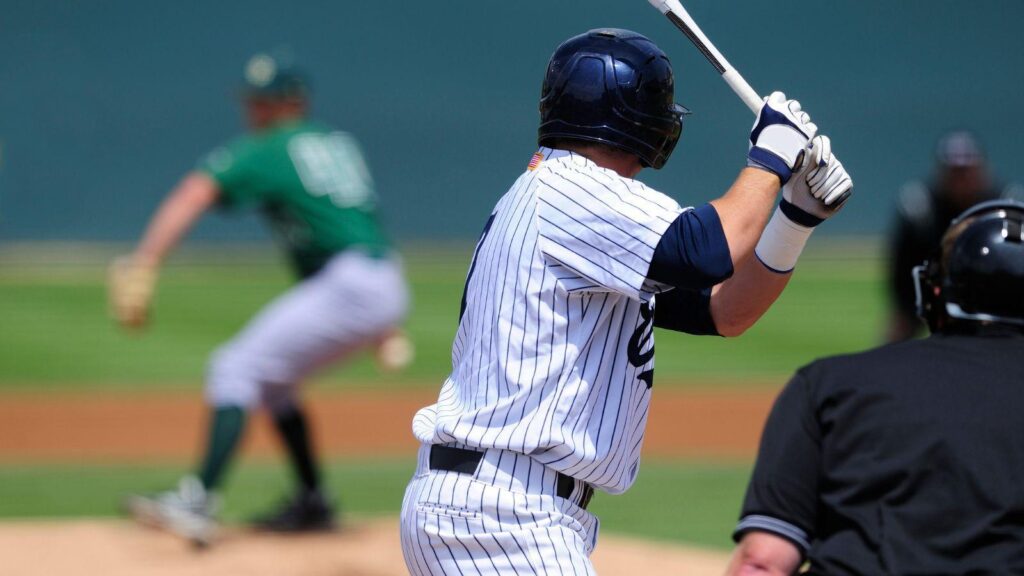
A pop fly arcs into a high September sun. The shortstop drifts back, glove up, head tilted, and for half a second the ball disappears into a wash of white light. Then it reappears, drops, and either lands in leather or clanks off the heel of the glove. That half second is what baseball shades exist to solve.
Anyone who has lost one in the sky in late innings of a tied game knows the feeling. You pick it up off the bat, lose it at the apex, and spend the descent praying your last guess about where it was going still holds. Eyewear has quietly become one of the most consequential pieces of equipment in the sport, right alongside the glove and the cleat. Pitchers wear them on the bench to track release points. Outfielders rely on polarized lenses to cut glare bouncing off wet grass. Base coaches have started wearing wraparound frames to read pickoff moves without squinting.
Why baseball is harder on the eyes than most sports
Baseball asks the eye to do something unusual. In basketball or soccer the ball mostly stays in a player’s lower field of vision. Baseball routinely forces players to look directly up into the sky, against a backdrop that can shift from pale blue to white cloud to direct sun in the space of a single pitch. Infielders deal with line drives screaming out of a hitting background that may include shadows from the upper deck. Catchers stare into the late-afternoon sun for three hours at a stretch.
A 2018 study published in Optometry and Vision Science measured contrast sensitivity in college baseball players wearing tinted versus untinted lenses and found measurable improvements in tracking moving objects against bright backgrounds. The effect was largest under high ambient brightness, which describes most afternoon games from April through August.
And there is the boredom problem nobody talks about. A right fielder might see two balls hit toward him across nine innings. Both of them matter. Eye fatigue from squinting through 150 pitches of nothing makes those two chances harder than they need to be.
What separates real baseball sunglasses from regular shades
The word sunglasses covers a lot of ground. An $8 gas station frame is sunglasses. So is a $300 fashion piece that falls off at a jog. Neither belongs on a diamond.
Start with the frame. A player sprinting from short right to the foul line should not have to push glasses back up his nose. Most performance frames use rubberized nose pads and temple grips that actually tighten slightly when wet with sweat, which sounds like marketing copy until you sprint in a pair and notice it works. Wraparound shapes block peripheral glare from stadium lights and afternoon sun cutting in at an angle.
Then the lens. Polarization filters horizontally polarized light, which is what bounces off flat surfaces like wet grass, dirt infields, and metal bleachers. The tradeoff is that polarized lenses can make it harder to read certain digital scoreboards or LCD displays in the dugout, which is why some players keep a non-polarized backup pair. Lens color is its own argument. Amber and rose tints increase contrast against blue and green backgrounds, useful for tracking a white ball against sky or grass. Gray lenses preserve true color but reduce overall brightness. Mirror coatings reflect additional light away from the eye and look sharp on the field, though they add nothing functional beyond what a good base tint already provides.
The last thing, and the one most casual buyers skip, is impact rating. Baseball is one of the few sports where the equipment can come back at the player at over 100 miles per hour. ANSI Z87.1 is the relevant impact standard in the United States, and any pair worth wearing on a diamond should meet or exceed it.
The youth market is where the biggest changes are happening
Little League participation in the United States has stabilized after a decade of decline, and travel ball has exploded. The result is more kids playing more games in more daylight than at any point since the 1990s. Youth baseball sunglasses used to be an afterthought. Basically scaled-down adult frames that slid down small noses every time a kid ran. Ask any 10U coach who has watched a center fielder lose a routine fly because his glasses were halfway down his face.
That has finally changed. Brands now design youth frames sized for narrower temples and shorter nose bridges, and coaches at the 10U and 12U levels increasingly recommend that outfielders show up with a pair, the same way they would recommend batting gloves or a proper cup.
Parents shopping for sunglasses for baseball youth leagues should look for a few specific things. The frame should sit close to the face without touching the eyelashes. The lens should be polycarbonate, not glass, for impact safety. The strap or grip should hold up to a kid who will inevitably toss the glasses into a dugout cubby instead of a case. Parents who want to buy baseball sunglasses for a player who is still growing often find that frames in the $30 to $50 range hit the sweet spot. Durable enough to last a season, cheap enough that a lost pair does not ruin the week.
Softball follows nearly identical guidelines, with one wrinkle. Fastpitch generates higher line-drive speeds relative to reaction time because the pitcher’s mound is closer. Eye protection arguably matters even more in that context.
Prescription options have gotten better, fast
For players who need vision correction, the old options were ugly. Sport goggles in the 1990s and 2000s looked like swim gear and fogged up at the first sign of humidity. Players who needed eyeglasses for baseball often just played without them, or wore contacts that dried out by the fifth inning.
The last five years have changed that math. Several mainstream eyewear brands now produce prescription-ready sport frames with proper wraparound geometry, which used to be impossible because the curvature distorts prescription lenses. Free-form digital surfacing now compensates for that curvature, meaning a player can get prescription glasses for baseball that actually look like baseball sunglasses rather than safety goggles.
Contact lens technology has also improved, with daily disposables marketed specifically to athletes for moisture retention. A reasonable approach for players with significant correction needs is a daily contact lens underneath a standard pair of polarized sport frames, which gives the contrast benefits without the cost of a custom prescription wrap. It is not elegant, but it works.
Care, fit, and the small things that matter
Even the best baseball sunglasses fail if they are treated like a beach accessory. A few habits separate players who get three seasons out of a pair from players who scratch them in three weeks.
Rinse lenses with water before wiping them, because dust and infield dirt act like sandpaper on a dry lens. Microfiber cloths are cheap and live easily in a glove pocket. Frames stored in a hot car all summer will warp at the temples and loosen the fit. A hard case in the bottom of the bat bag solves that.
Fit checks matter too. Players who wear a batting helmet should make sure the temples of their sunglasses do not conflict with the helmet padding, which can push the frames off-center or create pressure points behind the ears. Some players flip their sunglasses up onto the brim of their cap when at bat, which works fine as long as the frame is light enough not to slide off during the swing.
For catchers, the calculus is different. Mask geometry conflicts with most wraparound frames, so many catchers either skip sunglasses entirely or wear a smaller, flatter frame that fits behind the cage. A few have started experimenting with photochromic lenses that darken in sunlight, which removes the need to swap eyewear between innings. Whether that actually works through a mask cage is still an open question among the catchers who have tried it.
What to expect from the next few seasons
The market for baseball shades will keep changing, mostly because the underlying lens technology keeps getting cheaper. Photochromic coatings that used to cost over $200 are now showing up in sub-$80 frames. Anti-fog treatments borrowed from ski goggles are being adapted for summer humidity. High school and college programs that issue team eyewear mean more young players are getting used to wearing sunglasses on every defensive inning, which builds a habit that carries into adulthood.
The upshot for any player, parent, or coach is simple. Baseball shades have moved from optional accessory to legitimate piece of equipment, and the price of entry for a competent pair has dropped to roughly the cost of a decent bat grip. Choosing them with some attention to lens tint, frame fit, and impact rating is not overthinking it. It is the same kind of preparation as breaking in a glove, and it costs about as much.